1. The Rise of Astro-Tourism: Hanle, Ladakh
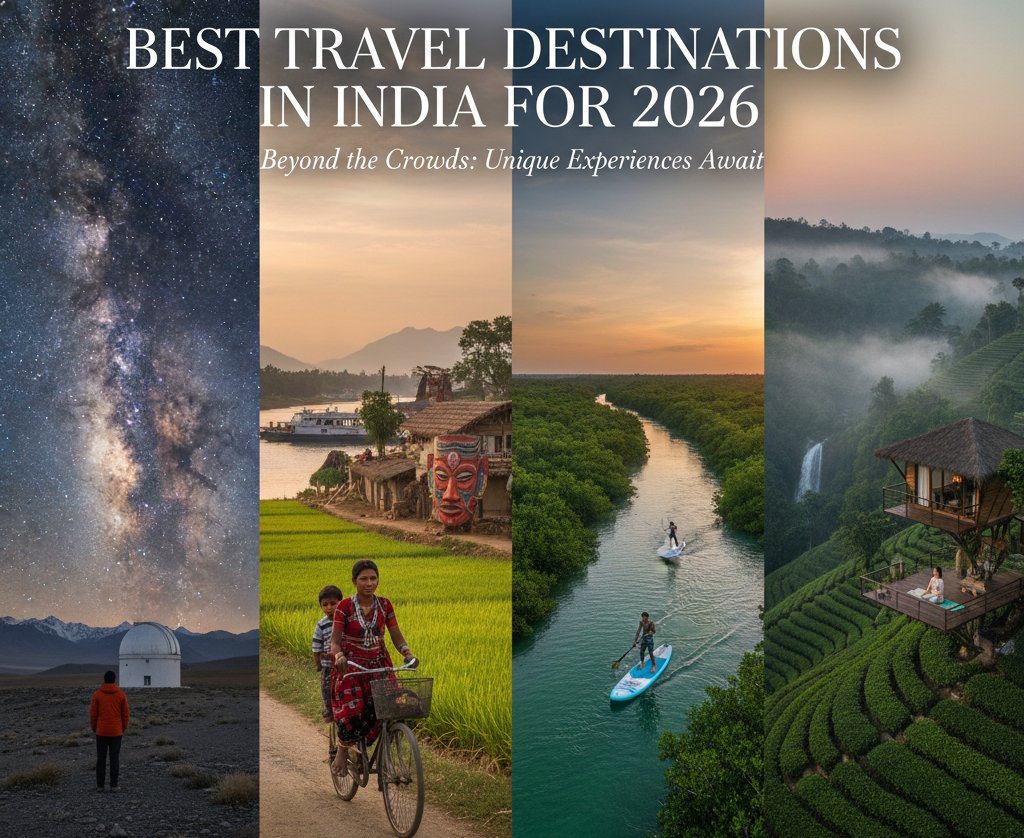
In 2026, the night sky is the biggest attraction. Hanle, India’s first Dark Sky Reserve, has become the crown jewel of Ladakh. With the 2026 Total Solar Eclipse generating global buzz, travelers are flocking to high-altitude regions for a glimpse of the universe.
- Why Visit in 2026: Hanle offers zero light pollution and a newly upgraded observatory infrastructure. It’s no longer just for scientists; specialized “Stargazing Homestays” now provide telescopes and expert-led celestial tours.
- The Experience: Imagine standing at 14,000 feet, the air crisp and thin, watching the Milky Way stretch across the sky with such clarity that it feels like you can touch it.
- Pro Tip: Plan your visit during a New Moon for the darkest skies. Carry a red-light flashlight to preserve your night vision.
2. The Cultural Heartbeat: Majuli, Assam
Majuli, the world’s largest river island, is currently trending as a “disappearing destination.” Due to erosion, the island is shrinking, which has sparked a wave of “Conscious Tourism” in 2026.
- Why Visit in 2026: New ferry circuits from Jorhat and the “Purvodaya” development scheme have made reaching Majuli easier while maintaining its rustic soul.
- Highlights: Stay in a traditional bamboo hut (Mishing house) and visit the Satras (monasteries). Witness the centuries-old mask-making tradition at Samaguri Satra, where artists create intricate faces from bamboo and clay.
- Best Time: November to February, during the Raas Leela festival.
3. The “New Goa” Alternative: Mulki, Karnataka
If you find Goa too crowded in 2026, the coastal town of Mulki is where you should head. Known as India’s Surfing Capital, it offers a tranquil mix of river and sea.
- Why Visit in 2026: It’s the hub for adventure sports like kayaking through mangrove forests and stand-up paddleboarding (SUP) on the Shambhavi River.
- The Vibe: Barefoot luxury and eco-conscious hostels. Unlike the loud party scene of North Goa, Mulki focuses on early morning surf sessions and quiet river-side dinners.
4. The Spiritual Evolution: Varanasi & Ayodhya
Spiritual travel has been “rebranded” in 2026 as Experiential Heritage. * Varanasi (Kashi): The city has successfully blended its ancient soul with modern amenities. The Namo Ghat and the Vande Bharat connectivity have made it the top “weekend spiritual break” for Gen Z and Millennials.
- Ayodhya: Beyond the religious significance, Ayodhya is trending for its grand architecture and the “Thematic Cultural Trails” launched by the Ministry of Tourism. It is now a global destination for those interested in Indian history and epic storytelling.
5. The Wellness “Glow-cation”: Wayanad, Kerala
The post-pandemic obsession with health has evolved into “Glow-cations”—trips designed for a total mental and physical reset.
- Why Wayanad: While Munnar remains popular, Wayanad offers deeper forest immersion. In 2026, luxury tree-house resorts and specialized Ayurveda retreats in Wayanad are at their peak.
- The Trend: “Forest Bathing” (Shinrin-yoku) is a major activity here, where guides take you into the heart of the Western Ghats to reconnect with nature in silence.
6. Hidden Gem: Gurez Valley, Jammu & Kashmir
For years, Gurez was a restricted zone near the Line of Control. In 2026, it is officially the “next big thing” in the Himalayas.
- The Vibe: Think of it as the Switzerland of India, but even more raw. The Kishanganga River flows through emerald meadows under the watchful eye of the Habba Khatoon peak.
- What’s Unique: The local Dard-Shin tribe’s culture is unique, and the wood-carved houses provide a glimpse into a world that time forgot.
2026 Travel Planning: Infrastructure & Tips
Connectivity: The Vande Bharat Expansion
By 2026, the Vande Bharat Sleeper trains have revolutionized domestic travel. Routes like Delhi to Srinagar and Mumbai to Udaipur allow you to skip expensive flights and travel in world-class comfort overnight.
The “Carrying Capacity” Rule
Several sensitive destinations like Spiti Valley and Auli have introduced “Daily Visitor Caps” in 2026 to prevent overcrowding.
- Tip: Always book your entry permits and accommodation at least 45 days in advance for eco-sensitive zones.
Sustainability: No-Trace Travel
Indian travelers are becoming more responsible. Many resorts in 2026 have banned single-use plastics and offer “Volunteer-ism” opportunities—where you can spend a day teaching at a local school or helping with mountain cleanup in exchange for a discounted stay.
Seasonal Guide for 2026
| Season | Best Destination | Why? |
| Summer (April–June) | Spiti Valley | The roads clear up; perfect for trekking to Chandratal. |
| Monsoon (July–Sept) | Araku Valley | The Eastern Ghats turn neon-green with mist-covered coffee plantations. |
| Winter (Oct–March) | Rann of Kutch | The White Desert festival (Rann Utsav) is best under the 2026 Full Moons. |
Conclusion: Why 2026 is India’s Travel Year
India in 2026 is about meaningful movement. Whether it’s the “Astro-Tourism” of Hanle, the “Slow Travel” of Majuli, or the “Wellness Resets” in Kerala, the country offers a depth of experience that goes far beyond a simple vacation. The infrastructure is better, the permits are digital, and the focus is firmly on preserving the beauty of these lands for the next generation.
Disclaimer: The information provided in this article is for general informational purposes only. While wedntrip.com strive to keep the content accurate and up to date—especially regarding 2026 travel policies and prices—travel conditions can change rapidly. Any reliance you place on this information is strictly at your own risk. We recommend checking with official state tourism portals and local weather advisories before finalizing your itinerary.